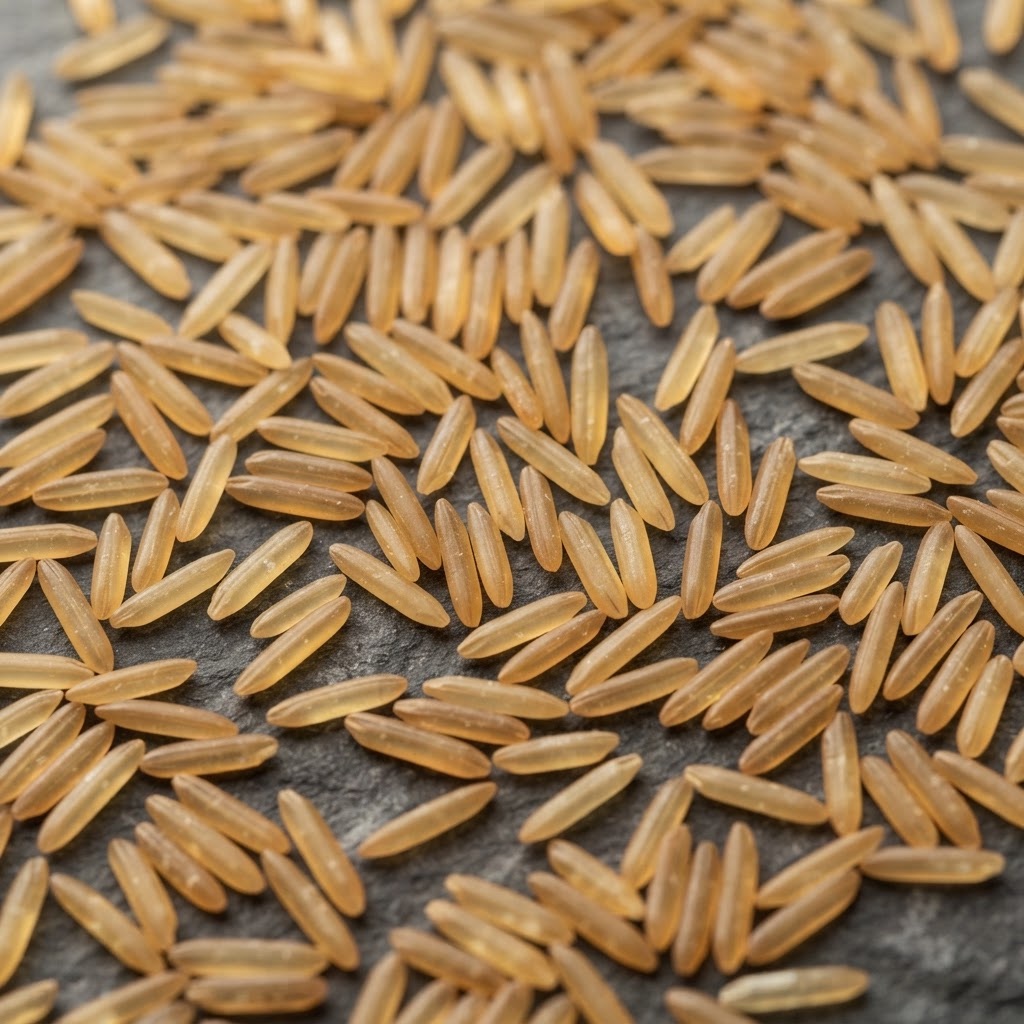
Basmati rice is aged for 12–24 months before milling and packing because aging lowers grain moisture, firms the starch structure and concentrates aroma — so the cooked grain elongates up to twice its raw length, stays separate and non-sticky, and releases the full basmati fragrance. Freshly harvested basmati, by contrast, cooks soft, sticky and short. This is why aged basmati commands a premium in every serious rice market from Riyadh to London.
What happens inside the grain during aging
- Moisture drops. Paddy arrives from harvest at roughly 20–25% moisture and is dried and stored until the grain stabilises near 11–12%. Lower moisture means harder grain, cleaner milling with fewer brokens, and longer shelf life.
- Starch firms up. Over months in storage, the amylose–amylopectin structure and protein matrix reorganise, so starch leaches less into the cooking water. The result: fluffy, separate grains instead of a sticky mass.
- Elongation improves. Well-aged 1121 basmati elongates from ~8.3 mm raw to 18 mm+ cooked — close to 2x — which is the single most prized attribute in basmati.
- Aroma matures. The signature basmati aroma compound (2-acetyl-1-pyrroline) and volatile profile settle into the deeper, nuttier fragrance buyers associate with premium aged rice.
How a modern miller ages at scale
At GRM Overseas' plants in Panipat, Naultha and Kandla, paddy and rice are aged in controlled silos and covered warehouses with monitored temperature, humidity and aeration — scientific aging rather than open-air storage. Each lot is lab-tested for moisture, elongation ratio and purity before milling, sortexing and packing. Combined capacity across the three plants exceeds 440,800 MT per year.
What buyers should ask a supplier
Crop year of the lot, verified moisture percentage, average grain length and elongation ratio, and purity/DNA test results. Aged stock from a named crop year is a specification, not a marketing claim — reputable exporters state it on the contract.
Related: Products · Specifications · Facility · Certifications